
What Your Glasses Say About You at Work Before You Say Anything
Glasses don’t prove your personality, but they shape the first impression around eye contact. Color, shape and fit can make the message feel sharper.
Quick answer: Glasses don’t prove your personality, but they do shape the first impression around eye contact. At work, color, shape and fit can make your style read sharper, warmer, bolder or more creative before the meeting gets past hello.
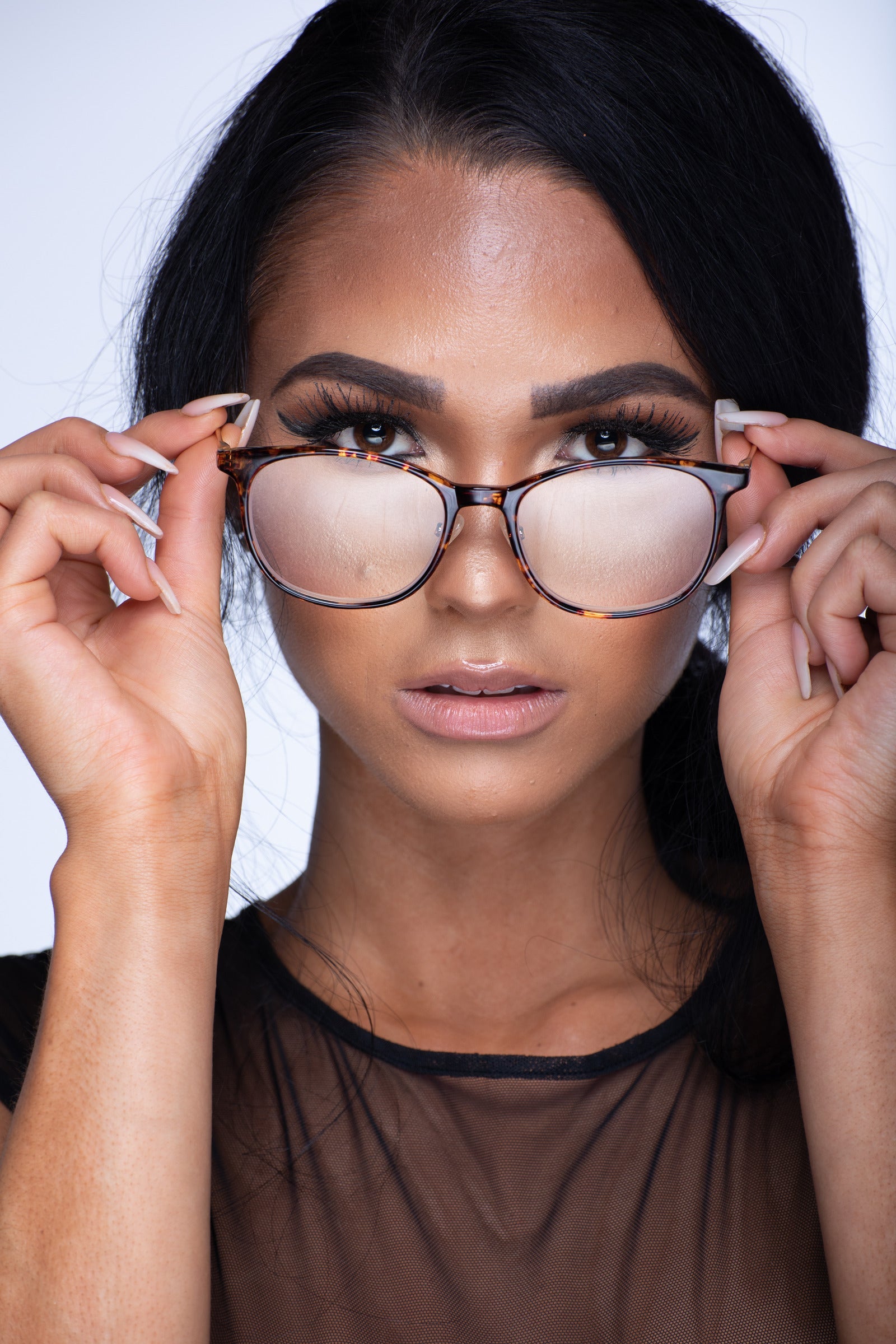
Black can feel direct. Tortoise can feel warmer. Leopard brings nerve. Crystal Clear keeps the look lighter. None of those choices replaces competence; they simply decide whether the face and the outfit are telling the same story.
Compare work glasses for women by color and shape, or use the Find Your Style guide when the workday pair needs a clearer point of view.
The meeting reads the face first
A weak pair makes the workday mirror feel bigger than it is. A better one keeps the whole thing from becoming a production. The wrong pair can turn a small task into a whole mood, and we have enough moods scheduled already.
Glasses should make the workday look handled without making the face look heavier. The useful details are boring only until they fail: comfort behind the ears, a bridge that does not slide, lenses that help, and a shape that reads awake. Office style is close-range work. The camera square is not sentimental.
The first check is fit. Glasses should sit where they belong instead of sliding down the nose right when the workday mirror needs us to act composed. The difference is small on a product page and obvious in a mirror.
Workwear does not stop at the jacket
The good version is not trying to be invisible. It is trying to be easy to live with. That means the bridge sits right, the temples behave, and the lenses do not turn the whole look into an errand.
The practical checklist is not glamorous until it saves the look: lens choice, fit, comfort, shape, and the color sitting closest to the eyes. The result is calmer, sharper, and a lot less emotionally expensive.
Color matters too. Black can sharpen the mood; tortoise can warm it up; leopard can make the whole thing braver; crystal clear can keep it clean and modern. The goal is not a different personality. The goal is a better version of the same face in the workday mirror.
What we do not need is the kind of eyewear that solves the practical issue while making the face look like it lost a negotiation. The better choice makes the workday mirror feel less like a trial and more like a normal part of getting dressed. It is calm, but not dull.
The pair has to last past lunch
We are not accepting eyewear that solves one problem and creates three new mirror problems. The right pair does not need a defense speech. It just looks right fast.
In practice, that means choosing glasses we can actually keep on: during the errand, the call, the label check, the mirror pause, the second look. The whole face relaxes when the detail stops fighting the rest of the look.
We don’t need a thesis here. We need to know whether the pair helps us read, work, present, sit across the table or look alive in questionable light. That is the relief hiding underneath the style.
The final check is practical, which is secretly where style gets honest. Can glasses stay comfortable, useful, and pretty when the day stops being theoretical? A good pair makes the practical part less noisy and the pretty part less fragile.
We can like the drama of the workday mirror without letting the glasses become dramatic themselves. The advice should sound like something a friend with taste would say before the second photo is even taken.
The practical recommendation is to choose glasses the way we choose the visible parts of an outfit: by how they behave once the day starts moving. A pair that needs constant adjustment has already started a side plot. The stronger choice is the one that works when the outfit is simple, the light is rude, and the day is already asking for patience.
The best version does not circle the same worry three times. It looks at the workday mirror, makes the call, and moves. That is how the mirror gets a useful answer instead of another negotiation.
That is why the little mirror yes matters more than a long explanation. The workday mirror will not wait for better lighting, better timing, or a more convenient mood. So the choice has to be ready for real light, real movement, real faces, and the ordinary chaos around us.
Tiny object, very public placement. That is why the face gets the final vote.
The verdict
Your glasses don’t write your résumé. They do sit exactly where eye contact happens.
Choose the pair that makes your workday style feel like you before the room starts assigning its own story.
Useful next click
For workdays, compare women's eyeglasses with reading glasses guide so meetings, small print, and camera squares all get handled.






Leave a comment
This site is protected by hCaptcha and the hCaptcha Privacy Policy and Terms of Service apply.